
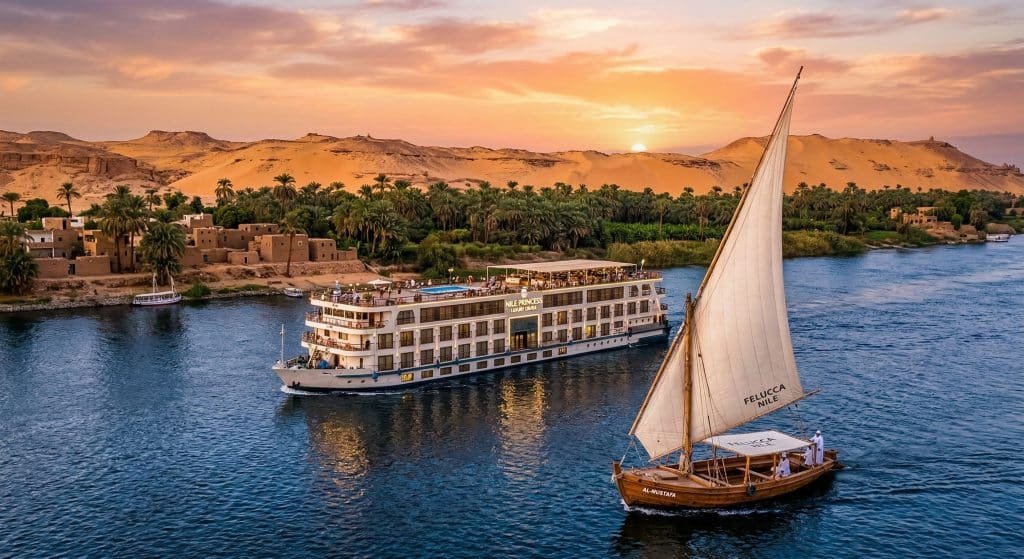

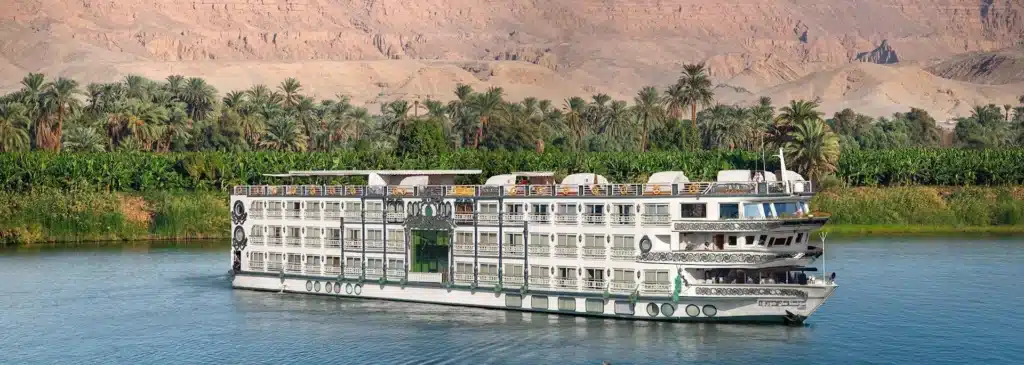
The Kom Ombo Temple is one of those rare places in Upper Egypt that almost instantly grabs your attention the moment you arrive, or at least it felt that way for me. It sits on a quiet bend of the Nile, and it’s usually folded into many travel routes like Aswan excursions, plus longer Egypt day tours that aim to show you the steady, timeless beauty of the river.
What makes Kom Ombo genuinely special is not just the spot itself but also the deeper meaning and the way it was laid out. It’s widely referred to as the Ancient Temple of Sobek and Horus on the Nile. And unlike most temples you see across Egypt, this one is dedicated to two gods instead of one. Sobek often shown as the crocodile god stands for strength and protection, while Horus, the falcon god, ties in with healing and kingship. That uncommon dual worship idea is exactly what gives the temple its clean balance and its symmetrical look that feels deliberate.
If you walk around, you notice each side seems to echo the other, with separate entrances, halls, and sanctuaries. It lines up with the old Egyptian idea of harmony, and that whole sense of paired realities or duality, really. Compared with many other Aswan attractions, Kom Ombo has this atmosphere that feels calm, yet also powerful, like you can sense both at the same time.
So whether you are doing Upper Egypt in a shorter stop, or you’re part of a longer Nile journey, the Kom Ombo Temple gives a lasting view into how ancient Egyptians mixed religion, symbolism, and everyday life into one remarkable site.
History of Kom Ombo Temple and Its Ancient Origins
The Kom Ombo Temple, um, was built in the Ptolemaic period, around 180 to 47 BC, on a place that people had already treated as sacred for a long time. It turned into a major religious hub, devoted to Sobek and Horus at the same time. In practice, this meant a mix of healing themes, protective symbolism, and ideas about kingship.
Later on, Roman rulers also stepped in, adding inscriptions and more architectural touches, so you can basically see different ages stacked up inside the same building. Of course, the Nile did not always behave nicely; flooding at times damaged parts of it, but restorations were carried out, especially during the relocation efforts connected to the Aswan High Dam.
Now the Sobek Temple is still protected as a heritage location, and it’s also a key stop for many Egypt day tours. It feels like a living snapshot of religious shifts and cultural changes along the Nile, across centuries.
Architecture and Unique Design of Kom Ombo Temple
The architecture of the Kom Ombo Temple is kinda what makes it one of the most fascinating Aswan attractions to see. The whole layout feels totally symmetrical, like two mirrored parts are placed side by side, one dedicated to Sobek and the other to Horus, yes.
Each side has its own sanctuaries, hypostyle halls, and courtyards. The walls are filled with careful carvings that show ceremonies, medical instruments, and astronomical signs, so you get a clear window into both spiritual and scientific everyday life in ancient Egypt.
One of the most curious elements is the Nilometer, used to measure the Nile’s water levels, and this mattered a lot for farming, and just for survival too.
Visiting Kom Ombo Temple: Location, Tips & Nearby Attractions
The Kom Ombo Temple is about 45 km north of Aswan, and it usually becomes a popular stop on most Aswan trips and even Nile cruise routes. Because it sits right by the river, it’s pretty easy to fold it into a full Aswan day trip.
For the visit, early morning or late afternoon is often the better choice, since it’s cooler and the light looks much nicer for photos. Bring comfortable shoes, water, and some sun protection, that kind of thing.
When you’re inside the temple grounds, you can also check out the Crocodile Museum; it’s known for mummified crocodiles that link back to the worship of Sobek. A lot of tours usually connect Kom Ombo with nearby places, for example, Edfu Temple, and it’s all done pretty smoothly.
Nearby Attractions Around Kom Ombo Temple
The area surrounding the Kom Ombo Temple offers several fascinating stops, making it an excellent addition to any Aswan day trip, Aswan excursion, or full Egypt Nile tour. Its riverside location between Aswan and Edfu allows visitors to explore multiple cultural and historical sites within a single journey.
1. Temple of Edfu
A major nearby spot is the Temple of Edfu; it’s devoted to the falcon god Horus. People usually call it one of the best-preserved temples in Egypt, so yeah, it’s a big deal. A lot of Nile cruise routes actually link Edfu together with Kom Ombo, so travelers get a deeper, clearer understanding of ancient Egyptian faith, plus how the architecture changed over time and not only one theme.
2. Crocodile Museum
Right inside the Kom Ombo Temple grounds, there’s the Crocodile Museum. It displays mummified crocodiles, and also artifacts tied to the worship of Sobek. Honestly it feels a bit rare, because it gives you a direct window into old rituals, and the spiritual ideas people attached to crocodile deities, as if you’re stepping into a different mindset.
3. Nile River & local villages
Then there’s the Nile River itself, with that scenic calm, and the views toward traditional villages along the bank. You get to notice the everyday riverside life, it adds this more genuine cultural texture to the day, especially when it’s part of a guided Aswan day tour where someone actually explains what you’re seeing.
Exploring Kom Ombo and its surrounding attractions creates a balanced experience of history, mythology, and natural scenery, making it a memorable highlight of any journey through Upper Egypt.